


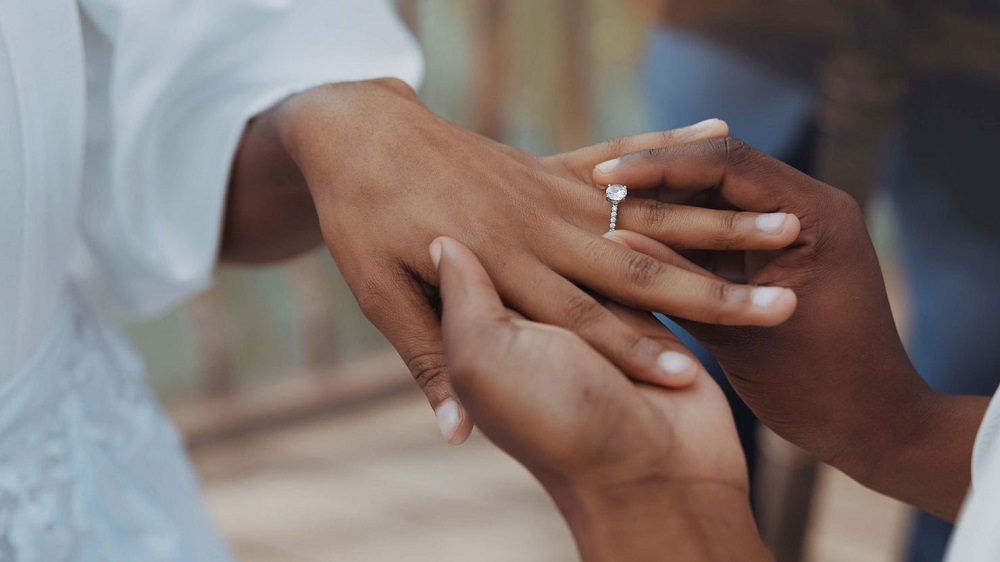
Recent civil registration data from the National Institute of Statistics of Rwanda (NISR) has renewed public discussion on marriage trends in Rwanda. Divorce trends cases show a gradual increase in recent years.
According to Civil Registration and Vital Statistics (CRVS) records, Rwanda records several thousand divorce cases each year. Estimates range between about 2,600 and 4,500, depending on finalized court decisions and official registrations. These figures remain low compared to total marriages. However, the upward trend has drawn attention from gender experts, policymakers, and citizens.
Gradual rise and contributing factors
Data shows a slow and steady rise in divorce cases. This trend appears more visible in urban areas such as Kigali. Analysts link the increase to economic pressure, shifting social norms, and greater awareness of legal rights within marriage.
Digital public services have also simplified legal processes. Citizens can now file for divorce using mobile phones or computers. This reduces the need to visit court buildings.
Despite the increase, experts stress that divorce rates remain relatively low compared to marriage rates. However, they insist that the trend reflects deeper social changes. These changes require careful interpretation, not simple statistical comparison.
Gender experts: A sign of social change
Gender specialists argue that rising divorce cases do not automatically signal a decline in family values. Instead, they point to several social and structural drivers behind the trend.
First, more citizens understand their legal rights. This awareness encourages them to seek legal solutions when marriages fail. Second, women’s economic empowerment strengthens financial independence. This allows many to make personal decisions about their relationships. Third, society shows less tolerance for abusive or unhealthy marriages. As a result, more people choose separation to protect their well-being.
At the same time, experts warn that the trend also reflects ongoing challenges. These include financial stress, poor communication between partners, and changing expectations within marriage.
Mr. Silas Ngayaboshya, who has expertise in Gender Equity for over 16 years from RWAMREC and currently serves as Director General for Gender Promotion and Women Empowerment Directorate in Ministry of Gender and Family Promotion (MIGEPROF), commented on the issue:
““From an expert standpoint, the observed rise in divorce cases in Rwanda calls for a balanced and forward-looking interpretation. While increased legal awareness, economic independence, and reduced tolerance for harmful relationships are important gains, there is also a structural gap that has shaped current dynamics. For a long time, efforts have significantly empowered girls and women, but with comparatively limited investment in preparing boys and young men to live in partnership with empowered women within the same households. As a result, many young men have remained anchored in traditional expectations where a woman is primarily seen as responsible for domestic care, child-rearing, and serving the household while the reality around them has already evolved.
He added that this gap in expectations continues to influence relationship stability across many households.
“This mismatch of expectations is increasingly suspected to be one of the underlying drivers of marital tensions and, in some cases, divorce. Women’s empowerment today goes far beyond fulfilling predefined gender roles; it expands opportunities, voice, and shared decision-making. When these gains are not matched by a corresponding shift in men’s attitudes and roles, friction can emerge. In contrast, an equitable redistribution of roles and responsibilities within the family has the potential to strengthen family ties, improve dialogue between partners, and provide positive role modeling for children ultimately breaking long-standing cycles that have, over time, constrained social, economic, and relational well-being.”
He further emphasized the importance of prevention and preparation in addressing avoidable marital breakdowns.
“It is therefore important to recognize that while divorce may not be eliminated entirely, it is both realistic and necessary to aim at reducing those cases driven by misunderstanding, lack of preparation, and uninformed expectations. Strengthening premarital education, promoting open communication, and fostering shared values within relationships are critical steps toward this goal.”
He also highlighted ongoing national efforts and expressed optimism about the future of family stability in Rwanda.
“There is, however, a strong reason for hope. Rwanda has already embarked on a more comprehensive and inclusive path. Through the National Gender Policy (2021) and the National Transformative Strategy on Engaging Men and Boys for Gender Equality (2024), the country is embedding gender transformative approaches at the heart of its development agenda ensuring that both women and men are prepared, engaged, and aligned in building stronger, more resilient families and communities for generations to come.“
Experts also call for stronger investment in premarital counseling. They recommend expanding family mediation systems and community-based dispute resolution. These efforts can reduce preventable marital breakdowns.
Citizens divided over the trend
Public opinion remains divided on the increase in divorce cases.
Some citizens see the trend as progress. They argue that individuals should not remain in harmful or unhappy marriages. From this view, legal separation protects mental health, dignity, and personal freedom.
Others express concern about modern lifestyles. They believe reduced patience weakens traditional family structures. In the past, communities relied more on cultural values and mediation to preserve marriages.
An elderly resident, Pascasie Mukamurenzi, 65, from Gasabo District, Ndera Sector, Cyaruzinge Cell, expressed concern:
“During our time, marriage was a commitment to a lifetime companion. But nowadays, it seems people are getting married with the purpose of sharing property when they separate. There is no love anymore” she said.
A young woman in her late twenties from Nyarugenge District, Nyamirambo Sector, Cyivugiza Cell whose name is Yvette Mutesi also shared her concerns about modern marriages.
“I grew up hearing my mother say that marriage is a lifelong commitment, but today I question that belief. People enter marriage as mature individuals, and if their personalities are not compatible, separation becomes necessary. Staying too long in the wrong marriage only leads to greater harm” she explained.
Economic hardship also shapes public opinion. Many citizens cite unemployment and financial pressure as key causes of marital instability.
Balancing tradition and modern realities
The debate reflects Rwanda’s broader social transformation. Traditional values that emphasize family unity now interact with modern ideas such as individual rights, gender equality, and economic independence.
Experts advise a balanced approach. They suggest that society should not view divorce only as a negative outcome. Instead, people should understand it as part of a wider social evolution. However, they stress the need for prevention systems that strengthen relationships early.
Recommended priorities include premarital education programs and accessible counseling services. Experts also highlight the importance of community mediation structures and economic empowerment for households. Religious leaders can also play a role by promoting forgiveness, communication, and commitment before marriage.
Rwanda continues to record strong marriage rates. However, the gradual rise in divorce cases signals changes in family dynamics. These changes remain subtle but important.
The main challenge lies in understanding the social, economic, and cultural factors behind this trend. As the country evolves, many agree on one priority. Society must focus on building stronger, healthier, and better-prepared families.
ALSO READ: Marriage and children: Why some couples stay in love while others grow apart


