


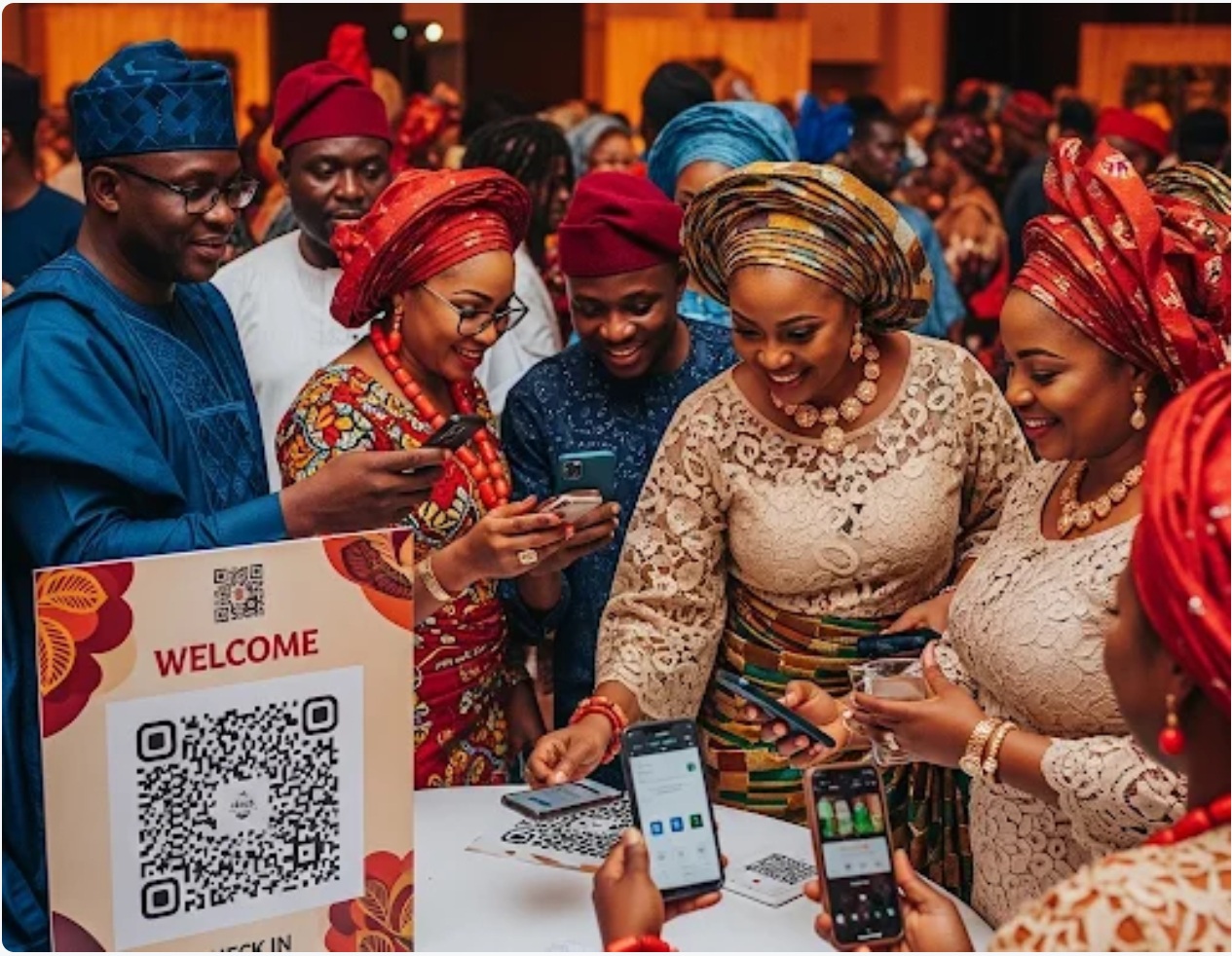
Nigerian weddings continue to preserve their rich cultural identity while increasingly embracing modern technology. Across many celebrations, QR codes, live streaming, digital gifting, and social media tools are becoming part of the wedding experience.
Although the methods of interaction are changing, the heart of the celebration remains the same. Music still fills the atmosphere, families still gather in joy, and blessings continue to define the moment.
Rather than replacing tradition, technology is helping couples modernize the way guests participate, contribute, and preserve memories.
From cash spraying to QR code giving
One of the most noticeable shifts in modern Nigerian weddings is the move from traditional cash spraying to digital transfers through QR codes.
For years, guests showed support by placing money on dancing couples during the celebration. Today, many couples now include QR codes on invitation cards, digital screens, or reception tables.
With a quick scan, guests can send financial gifts instantly through mobile payment platforms. This approach offers convenience, speed, and security, especially for guests who may not carry cash.
Importantly, the spirit of generosity remains unchanged. What has evolved is simply the method through which support reaches the couple.
QR codes improve guest experience
Beyond gifting, QR codes now serve multiple practical functions at weddings. Couples use them to share venue directions, event schedules, seating arrangements, and digital photo albums.
Guests can scan a code to access ceremony details, upload pictures, or leave voice messages and written blessings. This creates a more connected and organized celebration. Additionally, it allows couples to collect memories from multiple guests in one digital space.
Technology extends celebration beyond distance
Modern wedding technology also helps families and friends who cannot attend physically. Live streaming allows loved ones across Nigeria and abroad to watch ceremonies in real time. This has become especially important for diaspora families and international guests.
At the same time, social media platforms help spread joyful moments instantly. Photos, videos, and live updates turn private celebrations into shared community experiences. As a result, weddings now reach wider audiences while still maintaining intimacy.
Balancing tradition and innovation
Despite these digital additions, Nigerian weddings continue to honor their deep cultural roots. Traditional attire, music, dance, family rituals, and blessings remain central.
Technology does not remove these elements. Instead, it supports them. This balance between heritage and innovation reflects how society continues to evolve while respecting its values.
As digital payment systems and event technology continue to grow, more weddings across Africa may adopt similar tools.
The trend presents opportunities for event planners, payment providers, photographers, and digital media professionals. In the future, technology may further enhance planning, guest interaction, and memory preservation.
For now, Nigerian weddings offer a strong example of how culture and innovation can work together.


