


The origins of marriage trace back thousands of years, long before white dresses, diamond rings, and honeymoon travel. Understanding the origins of marriage helps explain why modern unions combine legal structure, public ritual, and personal commitment. Marriage began not primarily as romance, but as a practical institution shaped by survival, inheritance, labor, and social stability.
Anthropologists widely agree that early marriage arrangements were designed to organize reproduction, property, and alliances. Historian Stephanie Coontz argues in Marriage, a History that marriage historically structured sex, labor, and power more than love.
Origins of marriage in early societies: From polygamy to partnership
Examining the origins of marriage reveals that many early societies practiced polygamy. Across parts of Africa, Asia, and among Indigenous American communities, plural unions often reflected economic and demographic realities rather than emotional preference.
In agricultural settings, larger families meant increased labor capacity. However, as land and resources became limited, particularly in regions of East Asia, monogamous systems emerged as practical solutions for inheritance control and social order.
Anthropologist Helen Fisher explains in Anatomy of Love that monogamy developed primarily as a strategy for managing resources and stabilizing communities.
The well-known proverb “it takes a village to raise a child” reflects how early marriage functioned within collective systems rather than isolated nuclear households.
Origins of marriage and the roman legal framework
A major turning point in the origins of marriage occurred in ancient Rome. The Ancient Rome formalized marriage as a legal institution regulating inheritance, citizenship, and family authority.
Roman marriage emphasized hierarchy and duty. Legal historian Mary Beard notes that Roman family law influenced later Christian doctrine and European legal systems. Divorce was permitted, but shaped by strict gender expectations.
This legal transformation embedded marriage within governance, creating frameworks still visible in modern civil marriage systems.
Rituals and symbols: Why marriage traditions endure
Many modern wedding rituals stem from ancient symbolism.
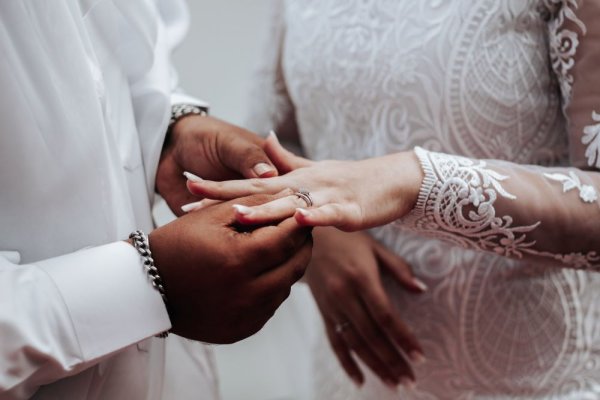
- Wedding rings originated in Ancient Egypt, where circles symbolized eternity.
- Bridesmaids trace back to Roman ceremonies, where attendants dressed like the bride to confuse harmful spirits.
- White wedding dresses gained prominence after Queen Victoria married in 1840, popularizing white as a fashionable bridal choice.
These practices illustrate how the origins of marriage combine symbolic continuity with evolving meaning. Wedding historian Susan Waggoner observes that traditions persist because they offer psychological continuity even as interpretations change.
From ancient institution to modern choice
Modern marriage differs significantly from its early forms. Today, emotional intimacy, equality, and consent are central expectations.
Sociologist Anthony Giddens describes contemporary unions as “pure relationships,” formed primarily for mutual satisfaction rather than obligation. Similarly, relationship expert Esther Perel writes in The State of Affairs that modern couples expect one partner to fulfill roles once distributed across entire communities.
Despite this transformation, echoes of the origins of marriage remain: legal contracts, public ceremonies, and symbolic rituals continue to frame marriage as both personal and social.
What the origins of marriage teach modern couples
Studying the origins of marriage highlights a consistent pattern: the institution adapts to social change. Traditions provide structure, but lasting unions depend on communication, shared values, and emotional intelligence.


