


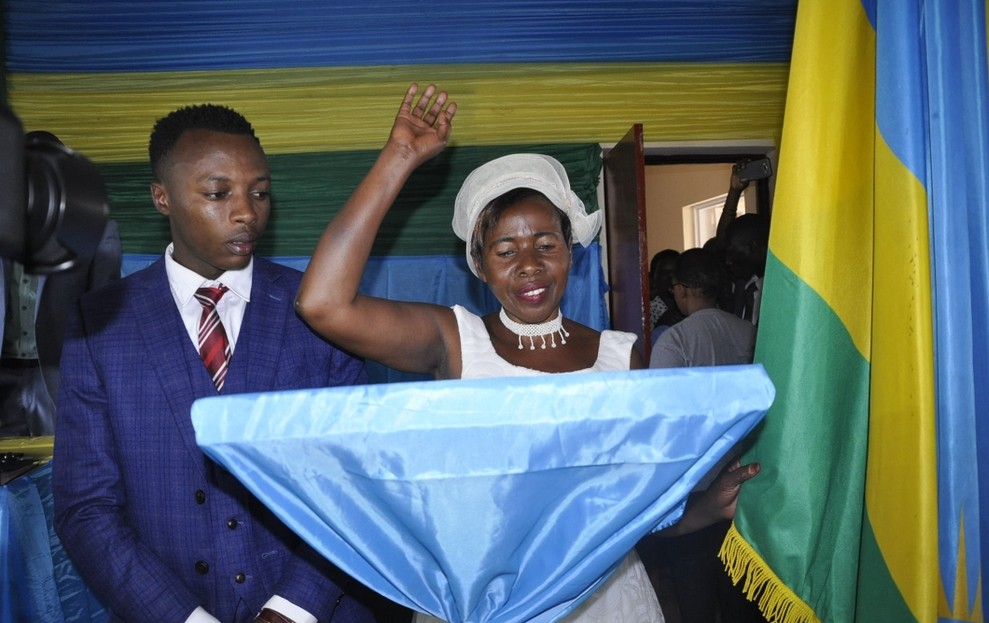
When 48-year-old Mukaperezida Clotilde married 21-year-old Kwizera Evariste in Rwamagana, photos of their ceremony and their public kiss quickly went viral. The couple, separated by twenty-seven years, reignited a national debate: does age really matter in marriage?
While many applauded their courage, others questioned whether such unions challenge Rwanda’s cultural norms or simply reflect a changing society. Their story, first reported by IGIHE.com, highlights how love, age, and social perception often collide in today’s Rwanda.
Rwanda’s Age-Gap Reality
According to the Rwanda Demographic and Health Survey (DHS 2022), the median age at first marriage stands around 24 to 25 years for women and 27 to 29 years for men. That three-to-five-year gap is smaller than in many African nations where differences can exceed ten years.
Rwanda’s Family Law sets the minimum marriage age at 21, aiming to curb child marriage and promote maturity in unions. Yet cultural expectations and economic factors still shape when and whom people marry.
ALSO READ: Civil vs Religious Marriage in Rwanda – What Couples Need to Know
Why Age Difference Matters
Power and Decision-Making
Even small gaps can influence who holds power at home. Older husbands often manage household finances or major decisions, which can affect a woman’s access to education, employment, or healthcare. Studies from BioMed Central link wider spousal age gaps to lower reproductive autonomy for women, especially in rural settings.
Health and Family Outcomes
The age at marriage often determines the age at first birth and maternal health. Early marriage is associated with teenage pregnancies, interrupted education, and higher health risks for both mother and child.
Widowhood and Economic Strain
Because women tend to marry older men, they face a higher likelihood of widowhood earlier in life. Without formal inheritance systems or steady income, many widows struggle financially or depend on extended family support.
Culture and Social Perception
In traditional Rwandan communities, marrying an older man has long symbolized stability and wisdom. But when the woman is older, as in Mukaperezida’s case, social reactions change.
Cultural elder François Habimana explains, “Our culture respects marriage, but society still expects the man to lead by age. When that’s reversed, people get uncomfortable.” However, urban voices are shifting. Kigali’s younger generation views marriage as a partnership built on shared goals rather than hierarchy.
Education, Urbanization, and Change
Rising education levels and urban migration have narrowed age gaps in many unions. More women now finish university, build careers, and choose to marry later. In cities, couples often marry for compatibility and shared vision, while in rural districts, economic pressure or family expectations still push early unions.
“Love follows where the stomach leads,” laughs a cultural elder in Huye. The humor hides a truth: poverty still drives some young women to marry older men seen as financially secure.
Global Reflections
Internationally, research published by ABC News found that couples with large age differences often face social disapproval but can experience strong emotional satisfaction when their relationship is grounded in respect and shared values.
Similarly, a study summarized in Shaadi Buzz notes that “age becomes irrelevant when couples maintain open communication and emotional maturity.”
Policy and Path Forward
Experts recommend enforcing Rwanda’s legal marriage age of 21 while investing in girls’ education and economic empowerment. Community-based programs can help families view marriage less as financial security and more as partnership. Involving men in these discussions can also reshape attitudes around power and respect in relationships.
A Changing View of Love
From viral love stories to everyday partnerships, Rwanda’s marriages are evolving. The average age gap may be small, but the debate around age, gender, and equality reveals deeper social shifts.
As education spreads and women gain independence, couples increasingly define marriage on their own terms, not society’s. Whether separated by four years or twenty, love in Rwanda today is less about age and more about understanding, commitment, and shared purpose.


