


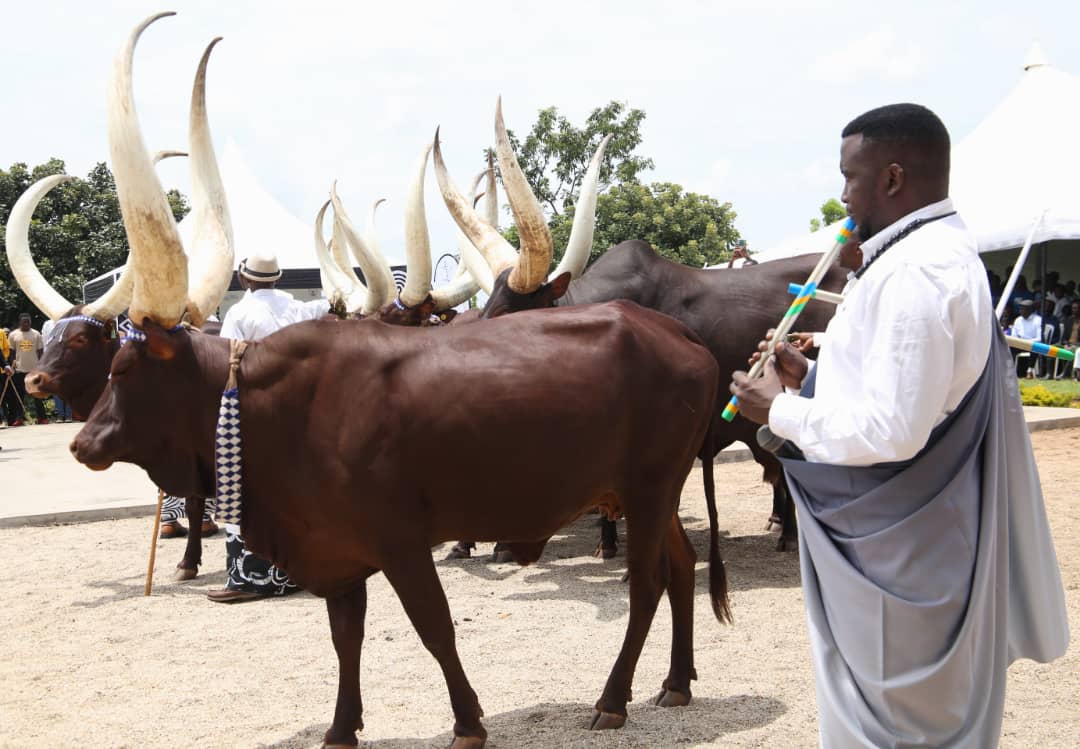
Rwandan wedding traditions continue to honor the cow as a symbol of blessing and unity. According to the National Institute of Statistics of Rwanda, more than 70 percent of marriages in rural areas between 2015 and 2022 included symbolic dowry elements such as cows or their modern equivalents. In urban areas the percentage is lower, with many families now offering cash or symbolic cows to reflect modernization and affordability concerns.
The Cow’s Role in Rwandan Wedding Traditions
For centuries, cows have symbolized prosperity, fertility, and continuity in Rwandan wedding traditions. During gusaba, the formal marriage negotiation, the offering of cows is more than a dowry. It is a gesture of respect, a bridge between families, and a way of honoring ancestors.
“Cows are not just wealth. They are life, blessing, and the link between generations,” explains Dr. Athanase Habimana, a cultural anthropologist at the University of Rwanda. “To give a cow is to give a piece of yourself and your lineage.”

ALSO READ: Love and Wedding in Kigali – Richard & Diane’s Elegant Day
A Tradition That Endures
Whether the wedding takes place in a rural homestead or a modern Kigali hotel, the cow remains present either physically or symbolically. It reminds families that marriage is not only about two individuals but also about community and the continuity of culture. A well-known Rwandan proverb captures this belief: Inka ni umutima w’urugo — The cow is the heart of the household.

Types of Dowry Cows and Their Meaning
Rwandan heritage expert Nsanzabera Jean de Dieu explains that families once bred different types of cows as dowries, each reflecting the bride’s status and the blessings desired for the couple.
- Cows ready to calve (Inka z’amashashi ziteguye kwima ikabyara)
Given to a virgin bride, these cows were expected to give birth around the same time as the bride welcomed her first child. Families would bless the couple saying, May you give birth to cows, symbolizing fertility and prosperity. - Mother cows (Imbyeyi)
Offered to a bride who had already given birth or who returned home after separation, these cows honored the woman’s motherhood and ensured she brought blessings to her new household. - Eight or a hundred cows with calves (Inka umunani cyangwa ijana n’izazo)
Reserved for exceptional cases, these gifts provided milk and wealth to the woman as she entered a new home, recognizing her honor and the high esteem of her family.
Modern Shifts in Rwandan Weddings
Today, Rwandan wedding traditions continue to evolve. Some couples choose a symbolic cow, a calabash of milk, or a monetary equivalent to ease financial pressure. Yet these changes do not erase tradition. Instead, they show the resilience of culture in a modern world.
“The value lies not in the number of cows, but in the respect for heritage,” says Dr. Habimana. “Even one symbolic cow carries blessings for generations.”

Words of Respect
Dowry remains a defining feature of Rwandan weddings. When a bride’s family accepts the groom, they may say she is Mukobwajana or Mutumwinka, phrases meaning the bride has been entrusted to the groom’s family, who in turn show gratitude by offering cows as a sign of respect.


