


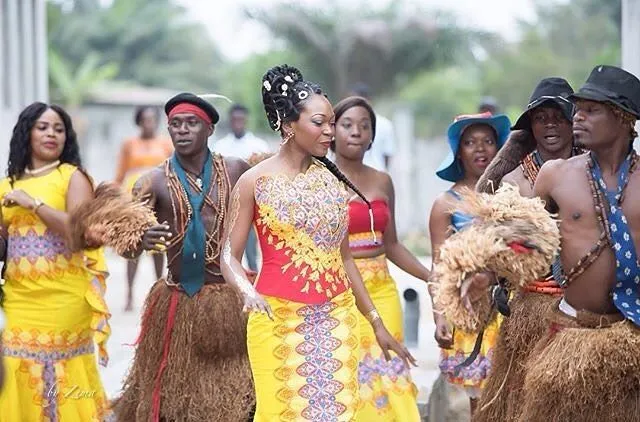
Traditional marriage in Gabon carries deep cultural meaning that extends beyond a formal union between two individuals. Families view marriage as a social contract that connects lineages, traditions, and community relationships. At the center of this process stands the bride price, a longstanding custom that remains an essential part of many Gabonese marriages.
Although modernization has influenced social practices across the country, the bride price continues to hold strong cultural significance. Communities view it as a gesture of respect toward the bride’s family and a symbol of commitment from the future husband. At the same time, the practice reflects the diversity of traditions among Gabon’s ethnic groups.
Cultural meaning of the bride price
In Gabonese society, the bride price represents more than a financial contribution. Families interpret it as recognition of the effort and care invested in raising a daughter. Through this tradition, the groom formally acknowledges the responsibility he assumes when joining another family.
Many communities consider the bride price a required step in traditional marriage. Without it, families often refuse to recognize the union under customary law. The practice therefore strengthens relationships between families while reinforcing cultural identity and shared values.
Furthermore, the process encourages dialogue between relatives from both sides. These discussions help families establish mutual trust before the couple begins married life.
Symbolic objects and their meanings
While the general idea of a bride price exists across Gabon, the details often differ from one ethnic community to another. Each group attaches specific meanings to certain objects included in the ceremony.
Common symbolic items may include fabrics, food products, beverages, and money. These elements represent prosperity, stability, and cooperation between the two families.
Several traditional objects also carry deeper cultural symbolism. An anvil, for example, often represents strength and resilience within the union. A mat may symbolize the creation of a new household, while a basket or tray reflects a woman’s role in managing family resources. Salt may represent harmony and flavor in married life, and matches or kerosene symbolize the fire that sustains the home.
These symbolic gestures help transform the bride price from a simple exchange of goods into a cultural ritual that expresses social values.
Variations among ethnic groups
Different ethnic groups in Gabon interpret the bride price through their own cultural traditions. The Nzebi community, for instance, sometimes includes charcoal and coins as part of the ceremonial items. Charcoal represents protection from negative influences, while coins symbolize prosperity and fertility.
Among the Myènè people, families emphasize strong adherence to ancestral customs. Ceremonies often involve carefully selected symbolic objects that highlight the importance of heritage and family continuity.
Despite these differences, most ceremonies follow a similar structure. The groom’s family presents the requested items to the bride’s relatives, who review the list to ensure that all conditions have been met. Once the families reach agreement, participants often pronounce the phrase “Lembo Lembo,” which confirms the conclusion of the traditional marriage process.
Legal guidelines and economic considerations
The financial value of a bride price varies widely. In some cases, families request only symbolic items. In others, the list may include goods and financial contributions that represent a substantial expense.
To prevent excessive demands, the government of Gabon introduced legal guidelines that establish a symbolic ceiling for the bride price. Authorities created this measure to ensure that the tradition does not become an economic burden for couples.
However, families sometimes supplement the official limit with additional gifts or contributions that reflect their own customs. As a result, the total value of the ceremony may still differ depending on family expectations and the financial capacity of the groom.
Personal experience highlights cultural expectations
Experiences shared by participants in traditional ceremonies illustrate the social expectations surrounding the practice. Aristide Nzenguet, a member of the Nzebi community, described the bride price as a test of commitment for many men preparing for marriage.
According to Nzenguet, his own wedding involved negotiating a detailed list of requested items. He said the process required patience and compromise, yet he viewed it as an opportunity to demonstrate respect for his future wife’s family.
He explained that the experience felt easier because he married someone from the same ethnic group. Even so, he described the preparation as demanding and emotionally significant.
Tradition adapting to modern society
The bride price remains a central component of traditional marriage in Gabon, yet the practice continues to evolve. Urbanization, economic changes, and legal reforms have influenced how families organize ceremonies and determine the value of symbolic items.
Despite these changes, the custom continues to emphasize respect, responsibility, and family unity. Cultural observers note that the tradition helps preserve heritage while allowing communities to adapt to modern social realities.
As younger generations balance tradition with contemporary lifestyles, the bride price may continue to evolve. However, its symbolic role in expressing family respect and cultural identity remains deeply embedded in Gabonese society.


