


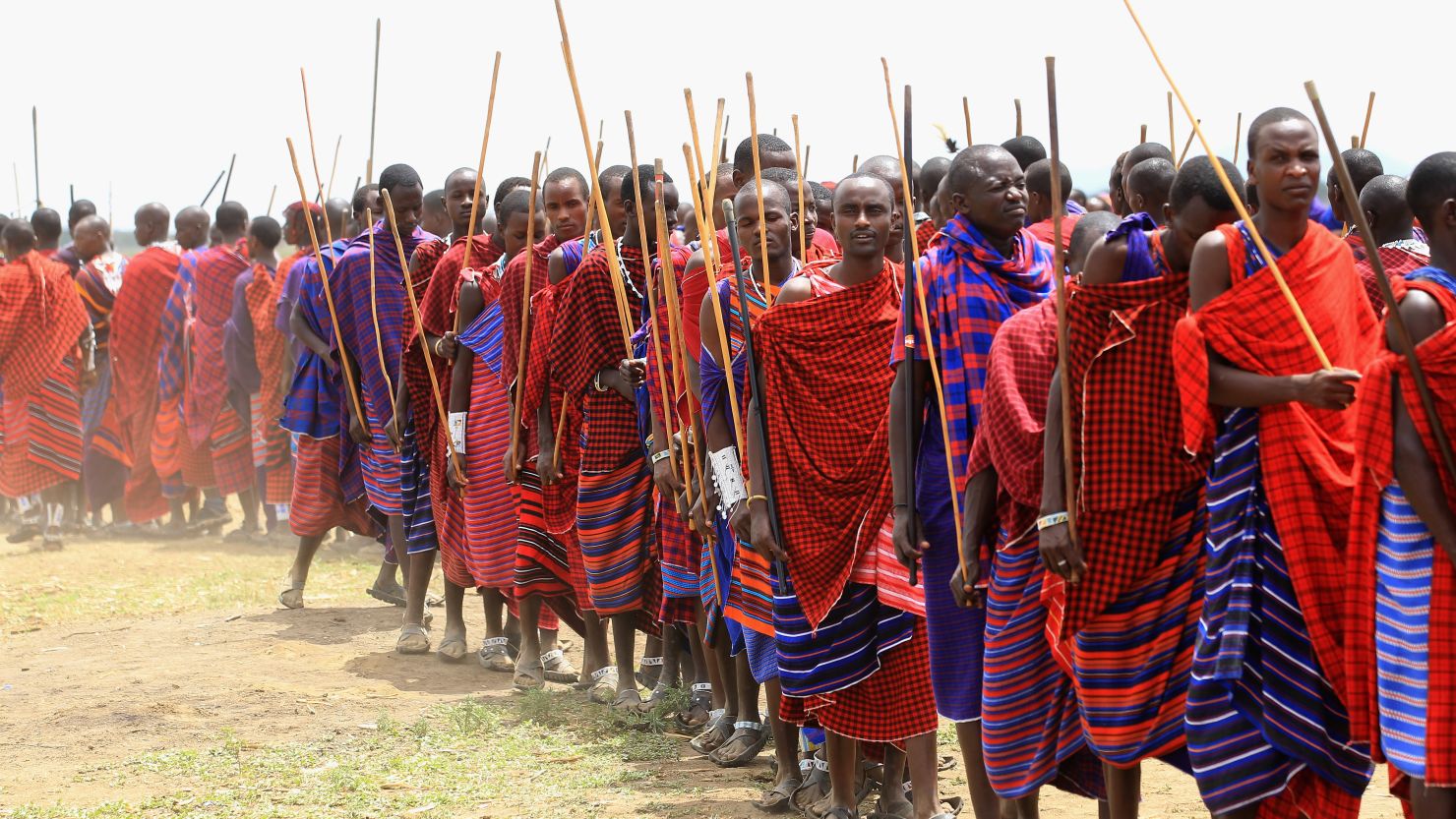
Marriage in the Maasai community takes place only after both the boy and the girl have gone through initiation. Once they reach this stage, elders step in to arrange the marriage often without informing the bride or her mother. Social events, especially traditional dances, play a big role in helping young men and women notice each other. If a boy admires a girl, he tells his parents, who then approach the girl’s family to request her hand in marriage.
If the girl’s family agrees, the boy’s parents return with dowry. Traditionally, this may include cattle, goats, sheep, blankets, bedsheets, sugar and khat. However, girls rarely have a say in this decision. Many are expected to accept the arrangement because it fulfills their parents’ wishes. Sadly, this sometimes leads to girls being married off at a young age to older men. If a girl refuses the marriage, she may even face pressure or physical punishment until she accepts.
The wedding ceremony
On the wedding day, the groom’s family brings a sheep or a bull that is slaughtered for the celebration. Interestingly, the bride does not eat this meat. Instead, a goat from her own family is slaughtered specifically for her. At the entrance, men stand with their sticks crossed to create a symbolic gate. The best man enters first, followed by the groom and his parents.
Traditional attire includes cowhide clothing decorated with red ochre, and even the shoes are made from animal skin. Both the bride and groom wear red ochre on their heads as part of the beauty and cultural symbolism. The bride receives a gourd containing milk and fat as her special gift.
Once the bride passes through the symbolic gate, elders bless her and allow her to proceed with her husband. Along the journey, she stops and takes three sips of milk. If they encounter rocky ground or a river, the best man lifts and carries her until the path is smooth again.
Arrival at the groom’s home
Upon arrival, elders conduct a welcoming ceremony. A room is prepared for the couple and the best man, who traditionally stays with them on the first night. Afterwards, the elders offer guidance on how to manage their new household and maintain a happy marriage.
The following day, members of the groom’s family each give the couple a cow, sheep or goat. Neighbors also bring gifts to support the newlyweds. Divorce is rare and discouraged unless the situation is extremely serious. If a couple separates, the dowry must be returned. Although remarriage for women is not encouraged, a woman may still remarry if she chooses.
Widowhood and family responsibilities
Many women eventually become widows because they often marry much older men. After the husband’s death, the eldest son becomes the head of the household. He takes responsibility for his siblings and his mother, even after he starts his own family. Widows, however, gain a respected status in the community and can participate in important ceremonies.
Marriage remains one of the most valued traditions in the Maasai community. It represents maturity, responsibility and social respect, ensuring that the couple is recognized and supported by the entire community.


