


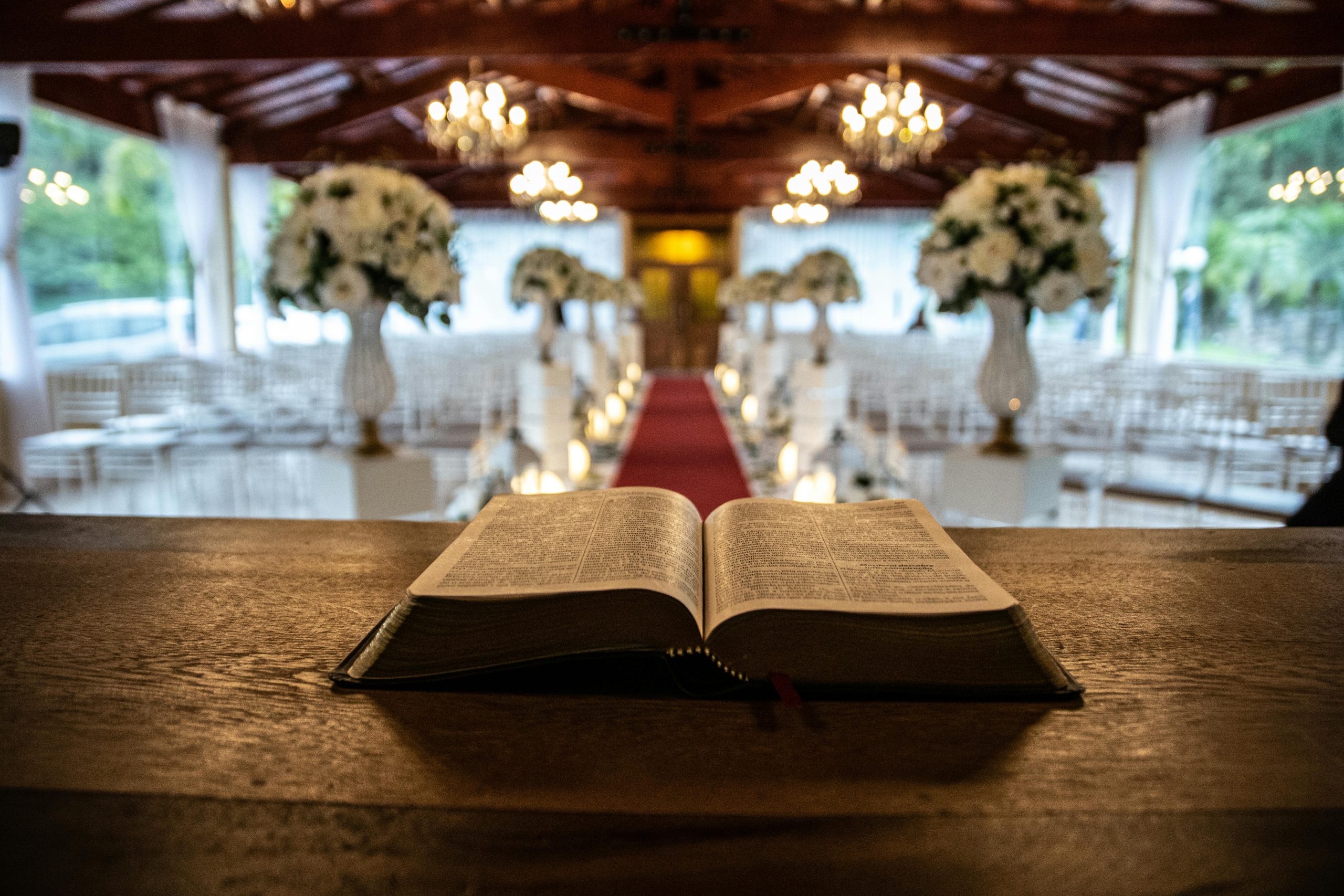
Two thousand years ago a small village in Galilee almost faced a wedding disaster. Guests at Cana were still singing and dancing when the wine ran out. In a culture where hospitality meant honor this was serious embarrassment. A young rabbi (spiritual leader or religious teacher in Judaism) named Jesus quietly told servants to fill six stone jars with water. Moments later the steward tasted wine finer than anything served before.
The Gospel of John records this as the first public miracle of Jesus, found in John 2:1–11, and it happened at a wedding. The scene is more than a charming story. It shows how deeply weddings mattered in the world of the Bible and how a celebration of love became the setting for divine blessing.
Weddings in the Bible A Continuous Thread
Cana is not an isolated story. Across the King James Bible the language of weddings appears again and again, weaving a golden thread from Genesis to Revelation. The word marriage occurs about 45 times, while wedding appears only a few times but carries powerful meaning in parables and miracles. Variations such as marry and married show up more than 60 times combined, and the imagery of a bride appears around 14 times with bridegroom close to 20 times. From the first couple in Eden to the final marriage supper of the Lamb, these words and scenes reveal how the celebration of union is central to the story of Scripture, touching law, poetry, prophecy, and parable.
Adam and Eve are joined in Genesis as the first husband and wife. Isaac and Rebekah meet in a love story guided by prayer. Ruth and Boaz marry in Bethlehem and secure a family line that leads to King David. The passionate Song of Songs reads like a royal wedding song. Prophets such as Hosea and Isaiah use marriage imagery to describe God’s covenant with His people. The final book of Revelation closes with the marriage supper of the Lamb, a celebration of ultimate union.
Why Weddings Carried Such Weight
In ancient Hebrew society weddings were far more than private vows. They were public festivals and family contracts that bound households and forged alliances. Legal agreements, music, feasting, and community blessing combined to make marriage a cornerstone of social life.
Biblical texts reflect this dual importance. Malachi 2:14 calls marriage a covenant. Narratives like Ruth and Boaz celebrate love and social renewal. Jesus used wedding banquets in parables such as the wise and foolish bridesmaids in Matthew 25 to illustrate readiness, joy, and community.
Rwandan Faith and the Wedding Tradition
Rwanda remains one of Africa’s most religious nations with more than 90% of the population identifying as Christian. In most communities a wedding is not complete until it has been blessed in church even though a civil ceremony at the sector office is required for legal recognition. Families often combine a traditional gusaba (family introduction) with a church service and a legal registration. The result is a three layer celebration that blends culture, faith, and civic duty.
For many couples the church blessing carries the greatest emotional weight because it signals God’s favor and the support of the wider community. The expectation mirrors the biblical pattern where marriage is both a public covenant and a moment of shared joy.
Weddings Today Carry the Same Echo
The fascination with weddings has never faded. From the ancient feasts of Jerusalem to modern ceremonies in Kigali, couples still gather families and friends to celebrate love and covenant. Music fills the air, families exchange gifts, and guests share abundant food just as they did in biblical times. Whether the vows are spoken in a cathedral, a quiet backyard, or a village church, the meaning remains the same. A wedding continues to signal commitment, continuity, and hope for the future, proving that the joy recorded in Scripture is alive in every generation.
A Story Still Unfolding
The Bible begins with a wedding in a garden and ends with a wedding in a heavenly city. Between those bookends lie love stories, family dramas, and public feasts that remind us that the union of two people has always carried meaning far beyond a single day of celebration.


May God bless you Brother Azeem, you are taking us in the Bible on this Issue.
Keep telling us more about how it starts and how it ends, may be divorces will be minimized! Lack of knowledge understanding kills as any other weapon!