


Wedding tourism in Rwanda is transforming celebrations of love into a powerful driver of economic growth.
Recent data from the National Institute of Statistics of Rwanda (NISR) shows that registered marriages jumped from 35,529 in 2022 to 57,880 in 2023, before easing slightly to 52,878 in 2024.
Even with this small decline, more than 40,000 marriages are registered every year, including unions between Rwandan nationals and foreign spouses.
These numbers reveal a steady demand for wedding services—demand that ripples through Rwanda’s hospitality and tourism sectors.
How Couples Are Shaping Wedding Tourism in Rwanda
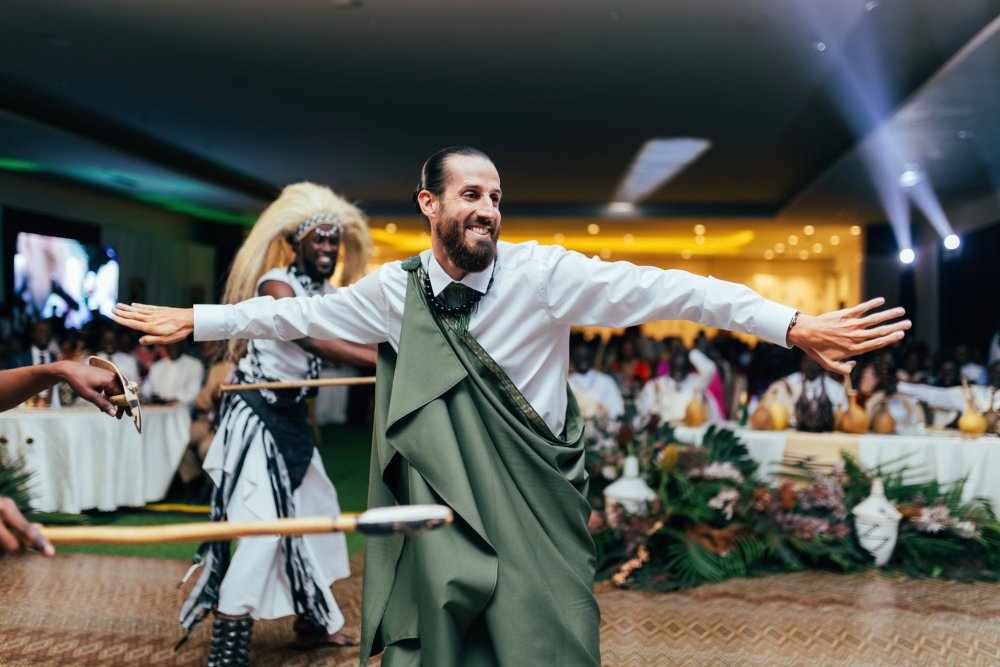
For example, Amanda Akaliza and Jonas Rivery conducted detailed research into ubukwe bwa kinyarwanda (traditional Rwandan weddings) before planning their own celebration.
As reported by IGIHE, they explored parental expectations, ceremonial rituals, traditional dress, and cultural performances to ensure their ceremony honored heritage while incorporating a modern touch.
Their story shows how cultural depth shapes planning decisions and drives spending within the wedding tourism market.

Wedding Tourism in Rwanda as a High-Value Niche
According to the Rwanda Development Board, wedding tourism in Rwanda is now recognized as a high-value niche in the country’s broader tourism strategy.
Unlike standard travel, wedding tourism combines hospitality, entertainment, culture, fashion, and transport.
Couples traveling to Rwanda for their weddings generate demand across hotels, restaurants, decorators, musicians, and transport services, creating a multiplier effect that benefits the wider economy.

How Wedding Tourism in Rwanda Boosts the Local Economy
Destination weddings bring international guests who spend on accommodation, catering, transport, and entertainment.
Venues ranging from Kigali’s Radisson Blu & Convention Centre to luxury retreats like Bisate Eco Lodge host both local and foreign weddings, driving business for florists, decorators, photographers, and event planners.
“This growth is visible on the ground,” says Papy Patrick, CEO of Me For You Rwanda, one of Kigali’s leading event firms.
“Many couples now request cultural performances, Rwandan craft décor, authentic food, and traditional fabrics—choices that increase spending and spread income to small businesses across rural and urban areas.”
In 2024, the World Travel and Tourism Council reported that Rwanda’s travel and tourism sector contributed a record FRw 1.9 trillion, about 9.8% of national GDP and 17.7% above the 2019 peak.
Wedding tourism is a key contributor to this momentum.

ALSO READ: Top 5 Wedding Venues in Kigali for a Perfect Celebration
Jobs and Community Benefits of Wedding Tourism in Rwanda
The growth of wedding tourism in Rwanda supports thousands of jobs.
Chefs, waiters, drivers, cultural performers, photographers, and guides all benefit.
Small enterprises also thrive: tailors produce traditional attire, cooperatives supply handcrafted souvenirs, and florists design décor using local flowers and materials.
The WTTC forecasts another 13% increase in 2025, with tourism expected to reach FRw 2.1 trillion, supporting over 402,000 jobs—more than 8% of total national employment.

Tourism Growth Beyond the Ceremony
Guests who travel to Rwanda for weddings often extend their stay.
They explore Volcanoes National Park, the shores of Lake Kivu, or the forests of Nyungwe.
These visits support tour operators, transport providers, and artisan groups in rural zones.
Destination weddings help spread tourism income beyond big hotels in Kigali into less-visited regions.

Rwanda’s Accessibility and Allure for Destination Weddings
Rwanda offers far more than stunning venues—it makes travel easy and enjoyable for couples and their guests.
Since 2018, citizens of all countries can obtain a visa on arrival, with many African Union, Commonwealth, and Francophonie nationals receiving fee waivers for short stays (migration.gov.rw).
The country is consistently ranked among Africa’s safest and cleanest, thanks to strong governance and a reputation for peace and security.
Kigali is celebrated as one of the world’s greenest and most orderly capitals, while the countryside delivers breathtaking scenery—from the misty Volcanoes National Park to the tranquil shores of Lake Kivu.
This combination of easy access, reliable safety, eco-friendly urban planning, and postcard-perfect landscapes makes Rwanda a natural magnet for couples seeking a wedding destination that blends romance, culture, and sustainability.
Barriers and Considerations
- While the opportunities are substantial, couples and planners should consider a few factors:
- Cultural Requirements: Incorporating traditional rituals, dress, and performances requires specialized suppliers and careful coordination.
- Logistics: Remote venues may involve extra transport costs and seasonal weather constraints.
- Peak Seasons: Booking during high season can mean higher prices and limited availability.
Clear guidance on timelines, paperwork, and budgeting will help international couples navigate these details and enjoy a seamless experience.
More Than a Celebration
Wedding tourism in Rwanda is more than a celebration of love.
It is a partnership between culture, community, and economic development, turning every union into an opportunity for national growth and global recognition.


Does this mean wedding can be used as source of foreigner devises or business.